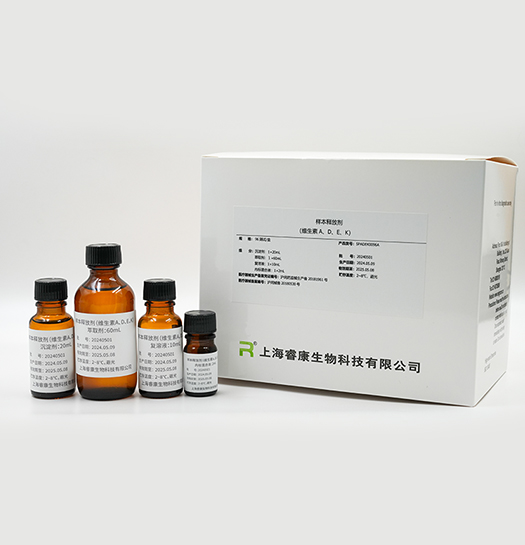
Fat-soluble vitamins include vitamins A, D, E, and K. They are insoluble in water but soluble in fats and organic solvents, hence the name "fat-soluble vitamins." In natural foods, these vitamins are usually present together with lipids, and their intestinal absorption is closely associated with lipid absorption. They pass through the lipid phase of cell membranes by passive diffusion and are excreted via the biliary system into the feces.
When lipid absorption is impaired, the absorption of fat-soluble vitamins is reduced, resulting in corresponding deficiency disorders. Conversely, long-term excessive intake of fat-soluble vitamins may lead to toxic effects on the body.

 Tel : 021-60838199
 Customer Service Line : 400-839-8199
 Fax : 021-60705089
 Address : Floor 3&4, 1st Building of Building 1,
 Scan to Follow Us

Copyright © 2025 Shanghai Reigncom Biotech Co., Ltd. 沪ICP备17039165号-1 | Technical Support
