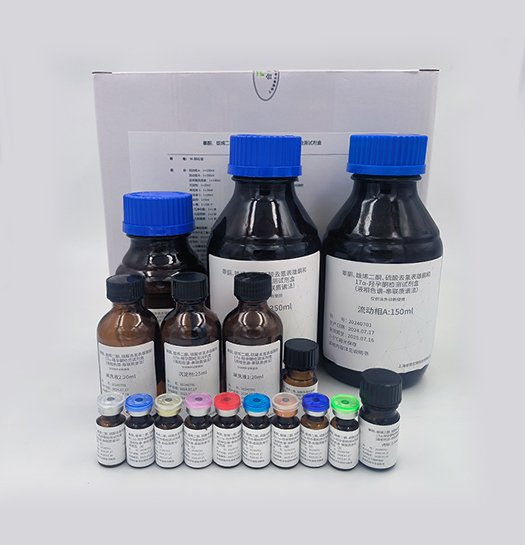
This product is intended for the in vitro quantitative determination of four hormones (testosterone, androstenedione, dehydroepiandrosterone sulfate, and 17α-hydroxyprogesterone) in female serum for auxiliary diagnosis.
One of the disorders associated with abnormal androgen levels is Polycystic Ovary Syndrome (PCOS). First described by Stein and Leventhal in 1935, PCOS is a common endocrine and metabolic disorder caused by both genetic and environmental factors. It affects approximately 5%–10% of women of reproductive age. Common clinical manifestations include menstrual irregularities, infertility, hyperandrogenism, and polycystic ovarian morphology, often accompanied by obesity, insulin resistance, and dyslipidemia. PCOS is also a high-risk factor for type 2 diabetes, cardiovascular and cerebrovascular diseases, and endometrial cancer.
Testosterone (T) is primarily secreted by the ovaries, with small amounts produced by the adrenal glands. It plays important roles in maintaining muscle strength and mass, bone density, and physical performance. In women, serum testosterone levels are higher than those of other androgens, making it the principal pathogenic androgen in PCOS.
Androstenedione (A4) is synthesized equally by the ovaries and adrenal glands. Like DHEAS, it has relatively weak androgenic activity and serves as the direct precursor of testosterone. Therefore, A4 measurement is commonly used in the evaluation of hyperandrogenism. Most PCOS diagnostic guidelines recommend measuring A4, and studies have reported that its inclusion can increase the detection rate of PCOS by approximately 9%.
Dehydroepiandrosterone Sulfate (DHEAS) is synthesized in the adrenal glands and has a relatively long half-life. Although its androgenic activity is weak, elevated DHEAS levels are observed in approximately 50% of patients with PCOS, while about 5% of patients present with isolated elevation of DHEAS.
17α-Hydroxyprogesterone (17α-OHP) is a precursor of mineralocorticoids and androgens. In patients with non-classic congenital adrenal hyperplasia, mutations in 21-hydroxylase result in abnormal accumulation of 17α-OHP, leading to increased androgen synthesis. Because PCOS shares clinical features such as menstrual irregularities, hyperandrogenism, acne, and infertility, measurement of 17α-OHP is recommended by many professional societies for the differential diagnosis of PCOS.

 Tel : 021-60838199
 Customer Service Line : 400-839-8199
 Fax : 021-60705089
 Address : Floor 3&4, 1st Building of Building 1,
 Scan to Follow Us

Copyright © 2025 Shanghai Reigncom Biotech Co., Ltd. 沪ICP备17039165号-1 | Technical Support
