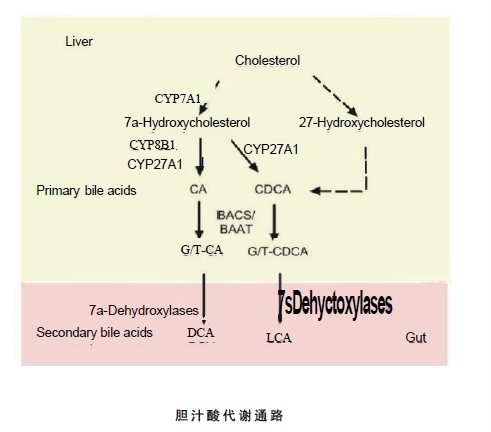
Bile acids are the final metabolic products of cholesterol in the liver and are important physiological mediators in the human body. They not only act as physiological detergents that facilitate the absorption, transport, and distribution of fat-soluble vitamins and lipids, thereby promoting intestinal fat digestion and absorption, but also function as signaling molecules involved in the regulation of triglyceride, cholesterol, and glucose metabolism. However, bile acids are also cytotoxic. When their concentrations exceed normal physiological levels, they can cause liver injury and cholestatic disorders, and in severe cases may contribute to the development of hepatocellular carcinoma.
Currently, routine clinical assays are generally limited to measuring total bile acids (TBA) and glycocholic acid (GCA), and cannot qualitatively or quantitatively characterize changes in individual bile acid species. Serum bile acid profiling provides valuable information for assessing the integrity of the enterohepatic circulation. In the early stages of liver disease, total serum bile acid levels may remain unchanged, whereas the concentrations of individual bile acid subclasses can change significantly. Therefore, quantitative analysis of the serum bile acid profile is an important and sensitive indicator for the early assessment of hepatobiliary function.

 Tel : 021-60838199
 Customer Service Line : 400-839-8199
 Fax : 021-60705089
 Address : Floor 3&4, 1st Building of Building 1,
 Scan to Follow Us

Copyright © 2025 Shanghai Reigncom Biotech Co., Ltd. 沪ICP备17039165号-1 | Technical Support
